
What Is the Going Rate for Commercial Cleaning Services in 2026?
 You got a quote last week. Maybe two. The numbers don’t match, the scope descriptions are vague, and now you’re wondering if you’re about to overpay — or underpay for something that’ll show up in how your facility looks on Monday morning. What is the going rate for janitorial and cleaning service in 2026? That’s exactly the right question to be asking, and the fact that you’re digging into it before signing anything puts you ahead of most business owners. The honest answer isn’t a single number — it’s a framework. And after servicing commercial facilities across the Orlando market, we know which variables actually move the price and which ones are just noise. Here’s how to read a quote like someone who knows what they’re looking at.
Start with the basics. Commercial cleaning is priced a few different ways — by square footage, by the hour, or as a flat monthly contract. Each method fits a different type of facility. Knowing which one applies to your space is the first step to figuring out whether a quote is fair.
How Square Footage Pricing Actually Works
Square footage is the most common pricing method for office buildings, medical suites, and retail spaces. According to HomeAdvisor, commercial cleaning rates typically run between $0.05 and $0.25 per square foot per visit. That’s a wide range. Here’s what most guides get wrong — they treat that range like it’s random. It’s not.
The lower end applies to large, open spaces with minimal obstacles. Think a warehouse floor or a simple open-plan office. The higher end applies to spaces with lots of surfaces to wipe, restrooms per square foot, medical-grade disinfection requirements, or high-frequency cleaning schedules.
A 5,000-square-foot office suite cleaned three times a week lands very differently than a 5,000-square-foot medical waiting room cleaned daily. Same square footage. Completely different scope.
Firsthand note: We walked a property near the Dr. Phillips area last spring — looked like a straightforward office on paper. Turned out to have six private restrooms, a full break room, and a server room that needed dust management. Square footage alone would have underpriced that job by 40%.
Hourly Rates — When They Apply and When to Watch Out
Some contracts are billed by the hour, especially for smaller jobs or one-time deep cleans. According to Thumbtack’s 2024 data, commercial cleaning hourly rates range from $25 to $90 per hour depending on region and scope. In Florida markets like Orlando, rates tend to sit in the middle of that national range due to labor costs and competition.
Hourly billing sounds simple. But it creates a real problem: you don’t always know what you’re getting until the invoice arrives. Flat-rate or square-footage contracts give you more budget predictability — and that matters a lot if you’re managing a multi-location business or working with a tight facilities budget.
This comes up constantly. A business owner picks hourly billing because it seems lower upfront, then gets surprised when a quarterly deep clean runs twice as long as expected. Scoping the work in writing before any contract starts protects you. If you’re trying to make sense of competing quotes before that conversation, our full-service janitorial company breaks down how we structure scopes so there are no surprises.
What Drives the Rate Up (And What Keeps It Lower)
Here’s where the real education is. The going rate isn’t just a number — it’s a reflection of what your facility actually requires. Several factors push rates higher, and knowing them helps you have a smarter conversation with any cleaning provider.
Frequency matters most. Daily cleaning costs more per month than weekly cleaning, but often less per visit. If your space sees heavy foot traffic — a medical office, a childcare facility, a busy retail location — daily or every-other-day service is usually the right call. Skipping visits to save money often leads to bigger cleaning bills later when buildup requires extra labor.
Facility type changes everything. A standard office is the baseline. Medical facilities, food service spaces, and industrial environments all carry higher rates because they require specialized products, training, and sometimes compliance documentation. In Florida, healthcare facilities follow AHCA standards for cleaning protocols. That compliance work has a cost.
Floor types add labor. Carpet, VCT tile, hardwood, and polished concrete all need different care. A space with multiple floor types — common in older Orlando commercial buildings — takes longer to service properly. Strip-and-wax services on VCT tile, for example, are typically priced separately from routine cleaning contracts.
Access and hours matter too. If your facility requires cleaning during off-hours, overnight, or on weekends, expect a rate adjustment. Evening and weekend labor carries a premium in most markets. That’s standard across the industry.
Flat Monthly Contracts — The Most Common Setup for Orlando Businesses
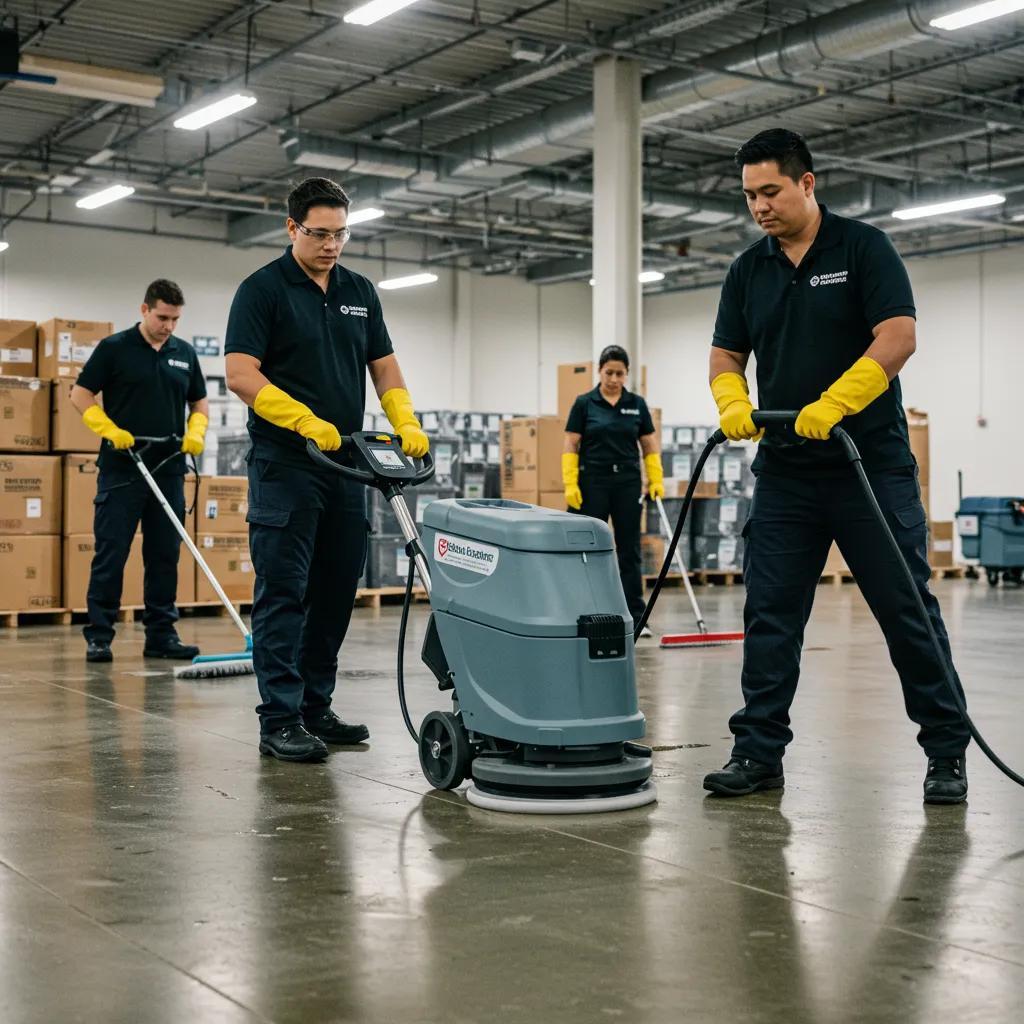 Most commercial cleaning relationships settle into flat monthly contracts. You pay a fixed amount each month, and the scope of work is defined in writing. This is the cleanest arrangement for both sides — you know your cost, and the cleaning team knows what’s expected.
According to data from the Building Service Contractors Association International (BSCAI), the majority of commercial cleaning contracts in the U.S. are structured as recurring monthly agreements rather than per-visit billing. That tracks with what we see in the Orlando market.
A well-written contract should spell out which areas are included, how often each area is serviced, what products are used, and what’s excluded. Restroom restocking, window cleaning, carpet extraction, and exterior pressure washing are often separate line items. If a quote doesn’t specify those things, ask before you sign.
And here’s something most guides skip entirely: the contract should also define what happens when something is missed. A reputable provider will have a re-service policy. If a restroom wasn’t cleaned on a scheduled visit, you shouldn’t have to wait until the next scheduled day.
Orlando-Specific Factors That Affect Commercial Cleaning Rates
Local context matters. The Orlando market has specific factors that influence what you’ll pay for commercial cleaning in 2026.
Florida’s humidity is a real operational factor. Mold and mildew growth accelerates in humid environments, especially in spaces with poor HVAC maintenance or older building envelopes. Cleaning teams working in Central Florida often have to account for more frequent restroom tile scrubbing, grout attention, and HVAC vent cleaning than providers in drier climates. That’s reflected in pricing for those specific tasks.
Tourism-adjacent businesses — hotels, retail near International Drive, entertainment venues — run at higher occupancy levels and need more frequent service. That drives up both frequency and per-visit scope. A retail shop in a tourist corridor cleans very differently than a quiet suburban office park.
Labor availability in Orange County also plays a role. The Orlando metro has a competitive labor market, particularly for service industry workers — a trend reflected in federal labor market activity data tracking workforce engagement across sectors. Cleaning companies managing turnover and training costs pass some of that through to contract pricing. It’s not gouging — it’s math. A provider with low turnover and trained staff costs more and delivers more consistent results. Having serviced hundreds of commercial facilities across Central Florida over the years, we’ve seen firsthand how staffing stability directly affects cleaning quality month over month.
How to Use Rate Information to Evaluate a Quote
Knowing the going rate is only useful if you know how to apply it. When you receive a quote, the number alone doesn’t tell you much. You need to compare scope, not just price.
Ask for a line-by-line breakdown. What’s included in the base rate? What triggers an additional charge? How is the square footage calculated — is it gross square footage or cleanable square footage? Those two numbers can differ significantly in buildings with storage areas, mechanical rooms, or unoccupied suites.
Look at the staffing model. Is one person cleaning your entire facility, or is it a team? A solo cleaner working a 10,000-square-foot building in two hours is cutting corners somewhere. The math doesn’t work. We’ve seen this create real problems for businesses that chose the lowest quote without asking how the work would actually get done.
Check whether the provider carries proper insurance. In Florida, commercial cleaning contractors should carry general liability and workers’ compensation coverage. An uninsured cleaner on your property is a liability exposure for your business — not just theirs.
And ask about supervision. Who checks the work? Is there a quality control process, or does the client only find out about missed tasks when they walk in Monday morning? A provider operating out of Suite G-100 Orlando and working across the Central Florida market should be able to answer that question clearly and specifically. If you’re comparing providers and want to see how those questions get answered in practice, our commercial cleaning services in Orlando page walks through exactly how we scope and price recurring contracts.